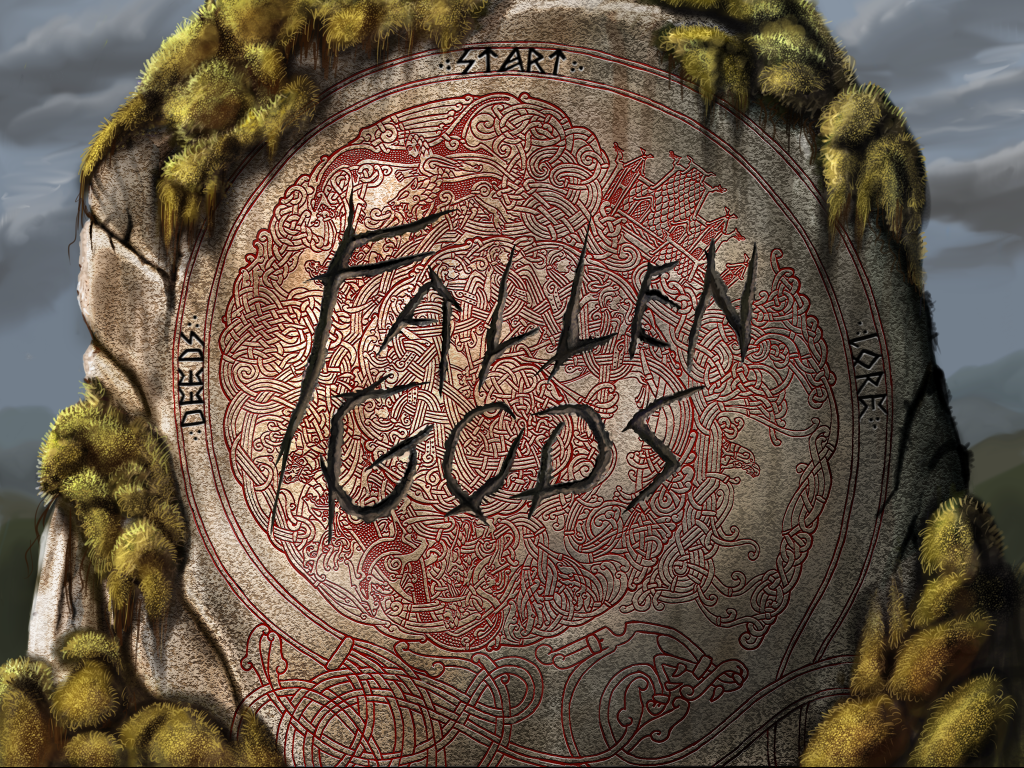
Once, the world was better, the gods greater, the wars over, the end farther. You were born in the Cloudlands during those days, one of the Ormfolk, forever young and strong, worshiped by those below for your forefathers’ deeds. But all is not well. Now, wolves and worse haunt the night, the law holds no sway, and men’s hearts grow hard toward your kind. Fearful of their dwindling shares of souls, your brothers turned against each other … and against you. And so you were cast down from the clouds, a fallen god broken upon the bitter earth. You rise, still free from death, with only the slightest hope of winning your way back to the heavens that are your rightful home.
Fallen Gods is an RPG inspired by the board game Barbarian Prince, the computer game King of Dragon Pass, and the sagas, eddas, and folklore of the far north. With a dark, wry tone, it tells the story of a god trying to survive in a dying world ruled by beings with great might and wits, but without the wisdom to heal the wounds left by their wars. The game has been in production for about four years, and its concepts have been building in my head for decades.
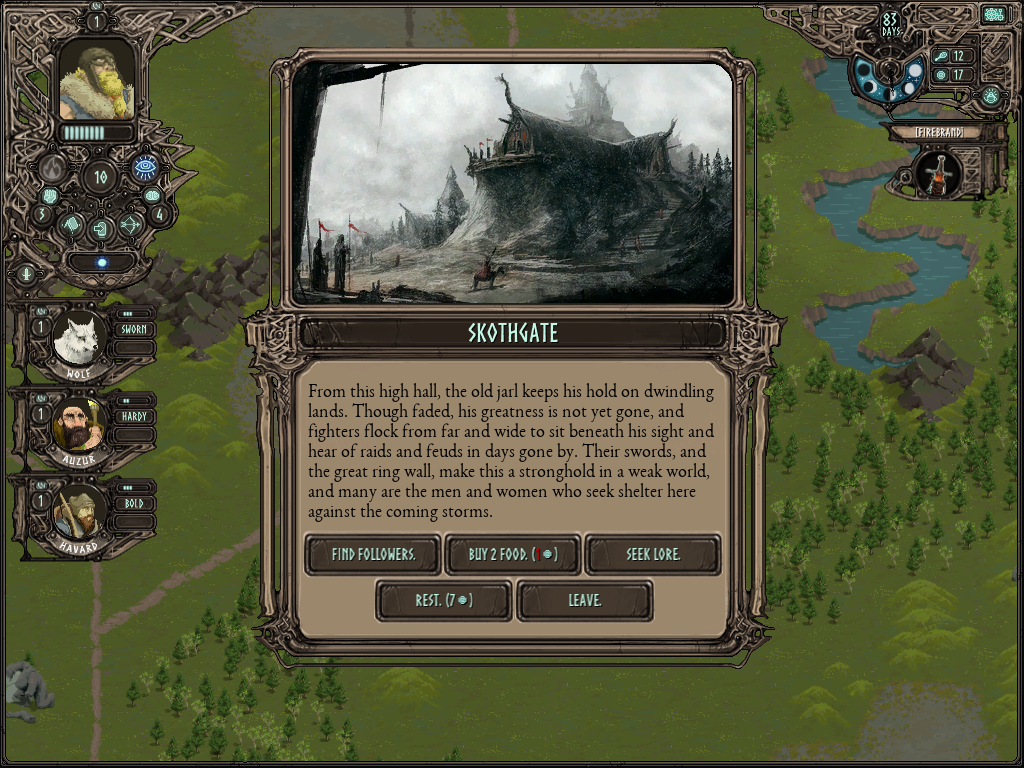
At the core of Fallen Gods are interactive events, choose-your-own-adventure vignettes in the spirit of the Lone Wolf gamebooks. Throughout the game, the player will enter towns and tunnels, meet strangers and friends on the road, face earthly and unearthly foes, and witness wonders of all kinds. Each of these events, accompanied by a hand-painted illustration, consists of a series of nodes, each a paragraph of text followed by several choices that depend upon the skills the god knows, the items he bears, and the followers he leads.
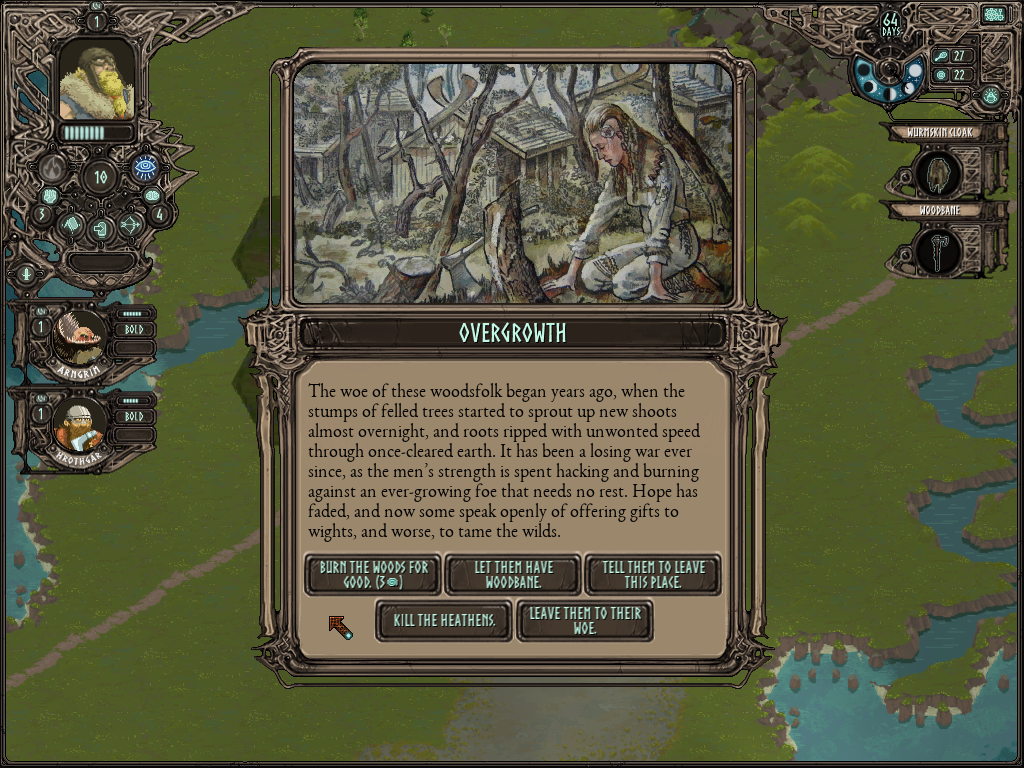
These events, like Fallen Gods itself, are about exploring the game’s world, mechanics, and story. In every session, dozens of the hundreds of possible events are spread across a procedurally generated landscape in a way that creates both surprise and coherence. Events are both destinations for the player to seek out and obstacles to bar his way. They provide the landmarks and characters that bring the world to life and make geographic exploration rewarding and dangerous.
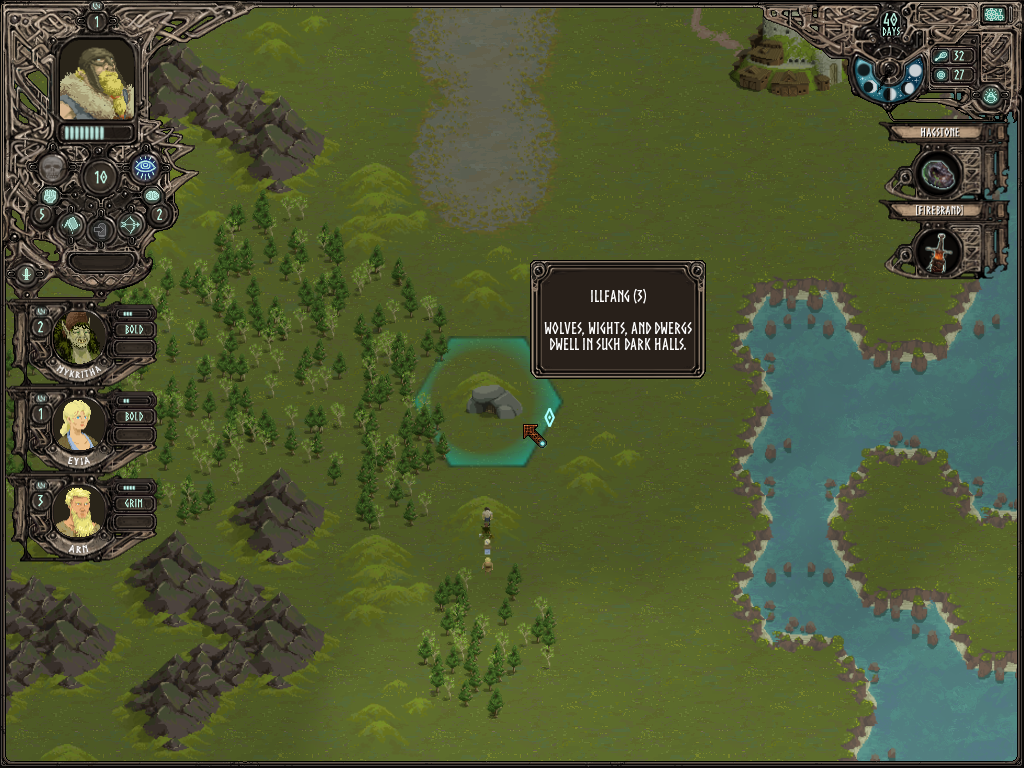
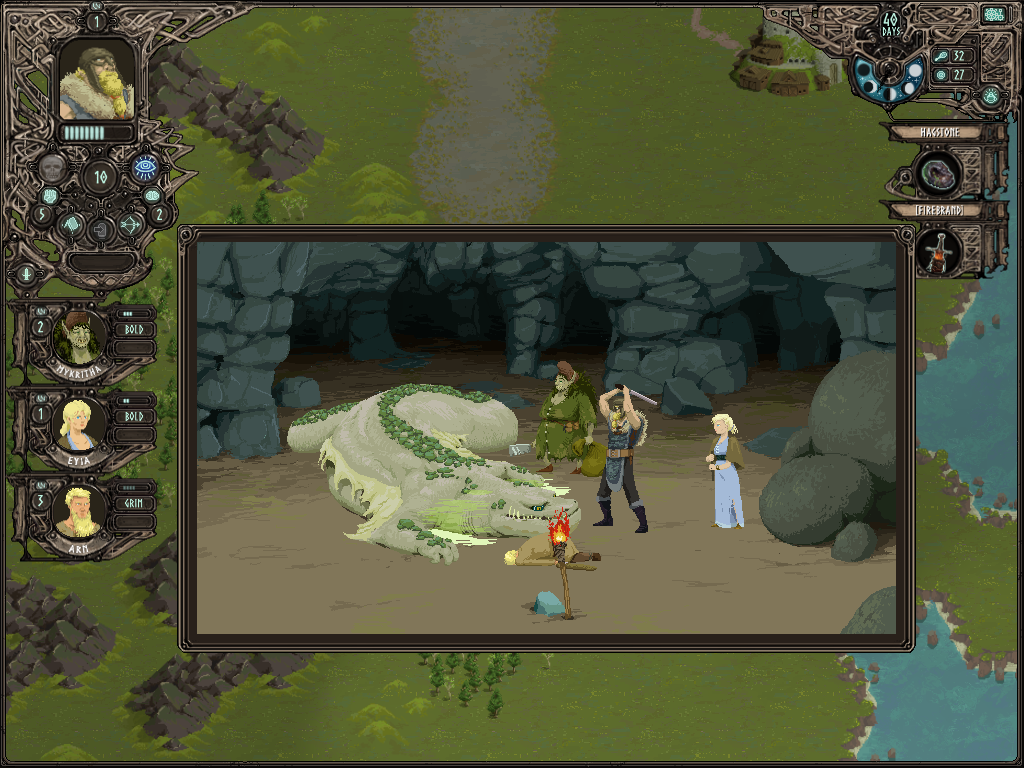
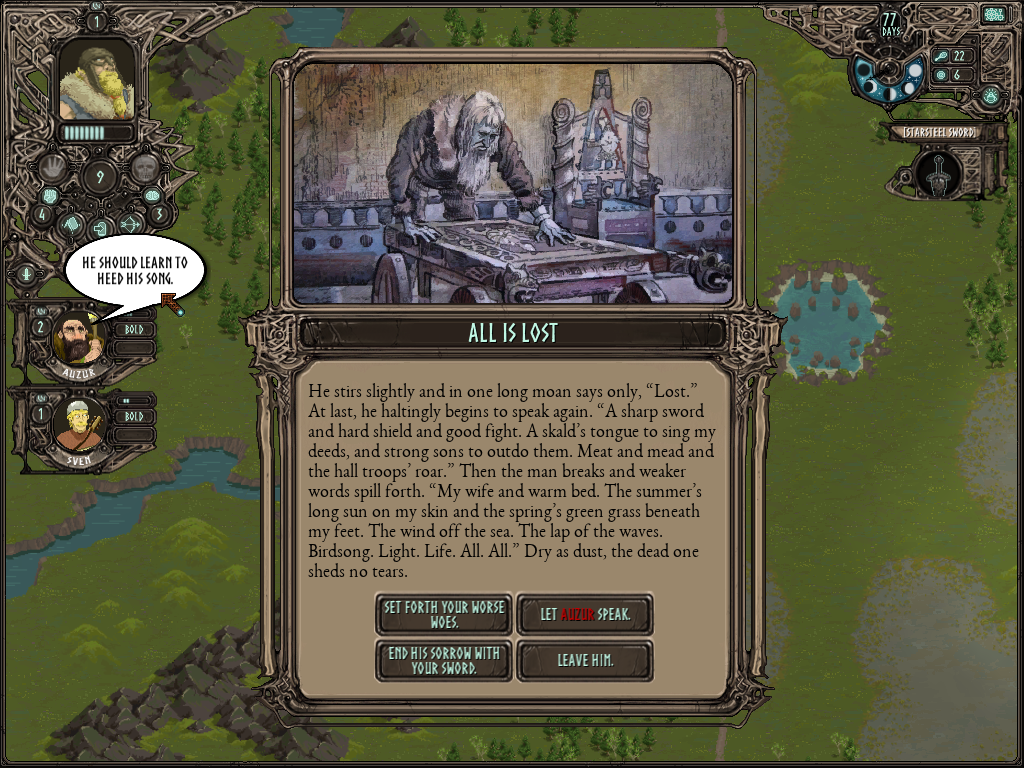
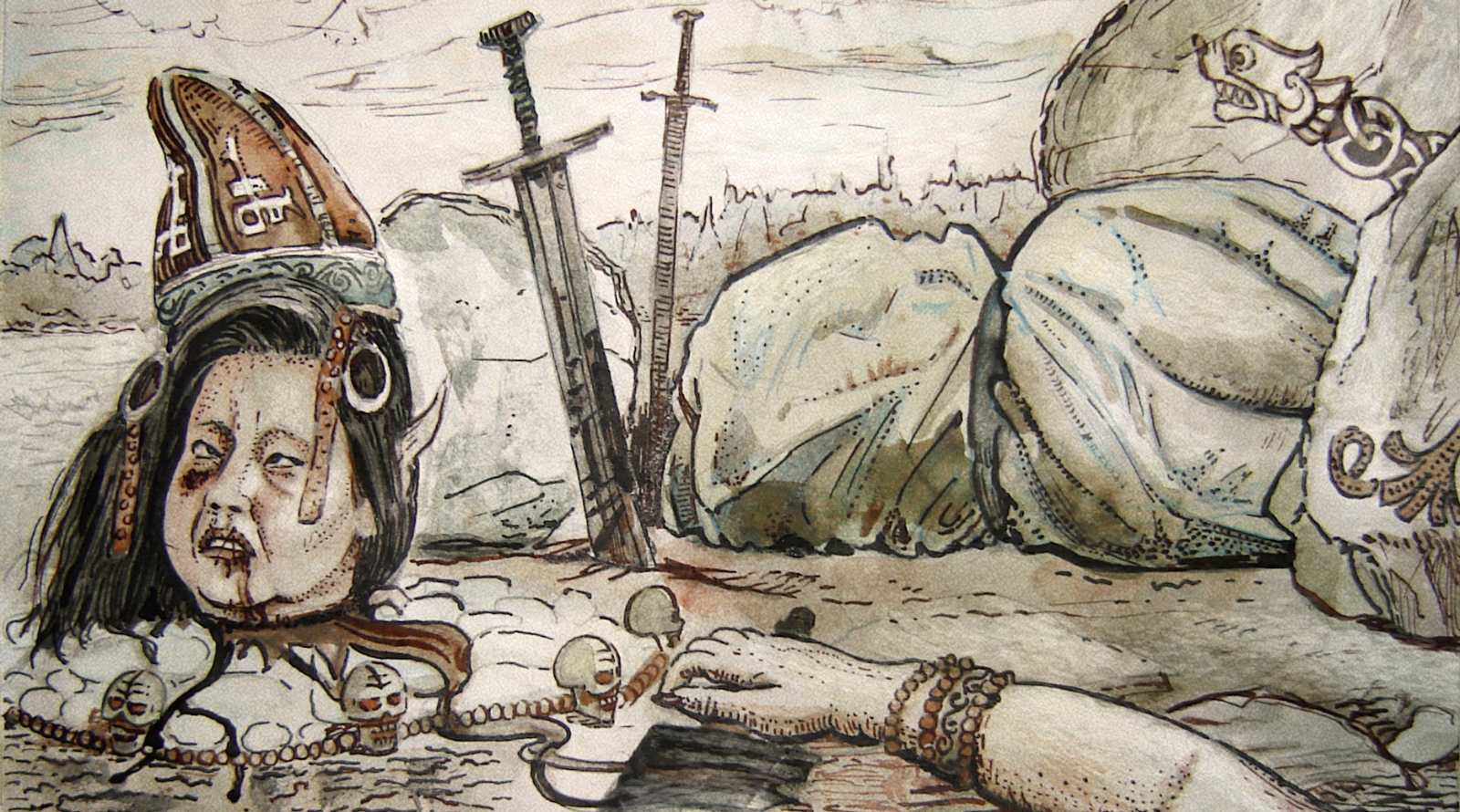
But Fallen Gods is not a “Norse” or “Viking” game; neither is it a Tolkien-inspired fantasy setting. Rather, like Tolkien’s own setting, it is drawn from the old lore and poured into a new glass, hopefully yielding something familiar but also strange.
Incidentally, if you have not played our first game, the point-and-click adventure Primordia, you can grab it on Steam (or GOG.com):
While the gameplay couldn’t be more different from that of Fallen Gods, the games share a similar design philosophy of careful worldbuilding through beautiful artwork, rich lore, and memorable characters.